
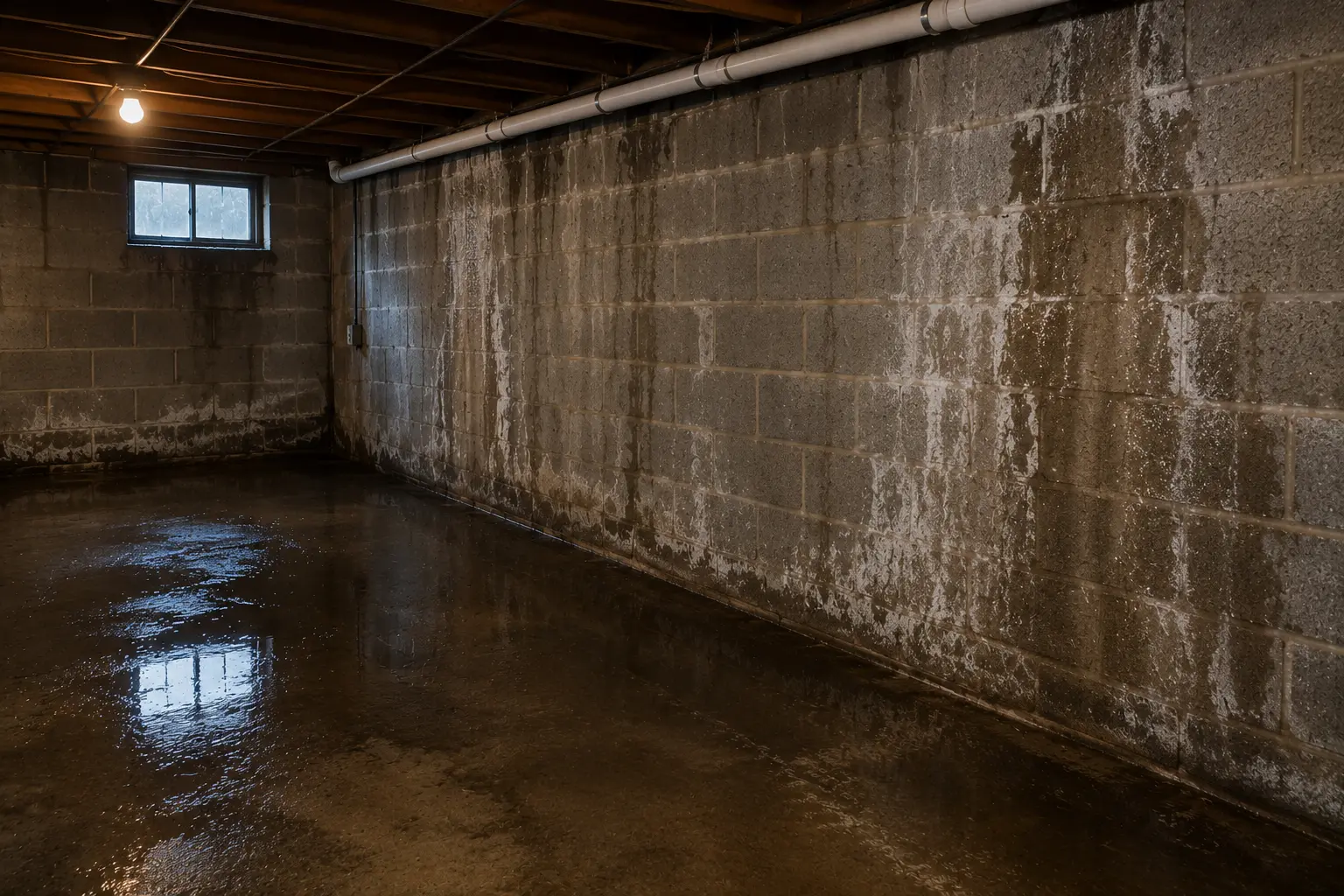
Basement waterproofing problems rarely announce themselves with a flood. In most Pittsburgh homes, water intrusion develops gradually — and by the time homeowners notice standing water, the damage has usually been building for months or years. Knowing the early warning signs gives you the opportunity to address the problem before it becomes significantly more expensive to fix.
1. Efflorescence on Walls
Efflorescence is the white, chalky residue that appears on concrete or block basement walls when water moves through the masonry and deposits minerals on the surface as it evaporates. It is one of the earliest and most reliable indicators of water movement through foundation walls. Efflorescence itself is not structurally damaging, but it confirms that water is actively migrating through your foundation — and where water is moving, deterioration follows.
2. Musty Odour
A persistent musty smell in the basement is almost always a sign of moisture — either from active water intrusion, condensation, or existing mold growth. Many Pittsburgh homeowners assume the smell is just “how old basements smell.” It is not. It is the smell of a moisture problem that has not yet been addressed. If the odour intensifies after rain, water intrusion is the likely cause.
3. Visible Mold or Mildew
Mold requires moisture to grow. Mold on basement walls, floor joists, or stored items is a direct indicator of sustained elevated humidity or active water intrusion. Beyond the structural implications, mold affects indoor air quality throughout the home — air from the basement circulates upward through the living space. A mold problem in the basement is a whole-house air quality concern.
4. Cracks in Foundation Walls or Floor
Not all cracks are equal. Hairline shrinkage cracks in poured concrete are common and often benign. Wider cracks, horizontal cracks in block walls, stair-step cracks in mortar joints, and cracks with displacement on either side are all more serious and warrant professional assessment. Any crack that shows water staining or active seepage needs to be addressed regardless of its size.
5. Peeling Paint or Bubbling Drywall
Paint that peels, bubbles, or flakes off basement walls is a sign of moisture pushing through from behind. Waterproof paint applied over a damp foundation wall is a temporary cosmetic fix — it does not address the source of moisture and will fail repeatedly. If you have applied waterproof paint and it keeps peeling, the wall is telling you the underlying problem needs proper treatment.
6. Rust Stains
Rust stains on the basement floor or walls typically indicate that embedded steel — rebar, tie rods, or lintels — is corroding due to moisture exposure. Corroding steel expands as it rusts, which can crack the surrounding concrete. Rust stains are a sign that water has been present long enough to cause metal corrosion, and the affected area should be inspected for structural implications.
7. Standing Water or Wet Floor After Rain
The most obvious sign. If water appears on the basement floor during or after heavy rain, the source needs to be identified and sealed. Water may be entering through floor cracks, wall-floor joints, window wells, or a failing sump system. A professional inspection will identify every entry point so the fix addresses all of them, not just the most visible one.
What to Do If You Notice These Signs
Basement waterproofing problems do not resolve on their own. The earlier they are addressed, the lower the cost and the less damage accrues. Pittsburgh Basement Pros provides free on-site assessments for homeowners across Allegheny County and the surrounding area. Call (412) 990-2520 or visit our Free Estimate page to arrange an inspection.
For independent information on basement water management in Pennsylvania, see Penn State Extension’s Stormwater Flood Control resource.